
Accountability
Leadership
Engage leadership in commercial priorities, ownership, practical project challenges and progress reviews.
Business Savvy Engineers / EPC(M)
Business Savvy Engineers helps EPC(M) organizations identify commercial value leakage before execution and build engineering teams that protect margin, cash and client value throughout project delivery.
Building capability over time? See the 100-day Program
§ 01 — The Profit Bermuda Triangle
The Profit Bermuda Triangle is the gap between the commercial value anticipated at award and what a project ultimately captures. Margin can erode through many small decisions, missed commercial opportunities and execution deviations, rather than one visible failure.
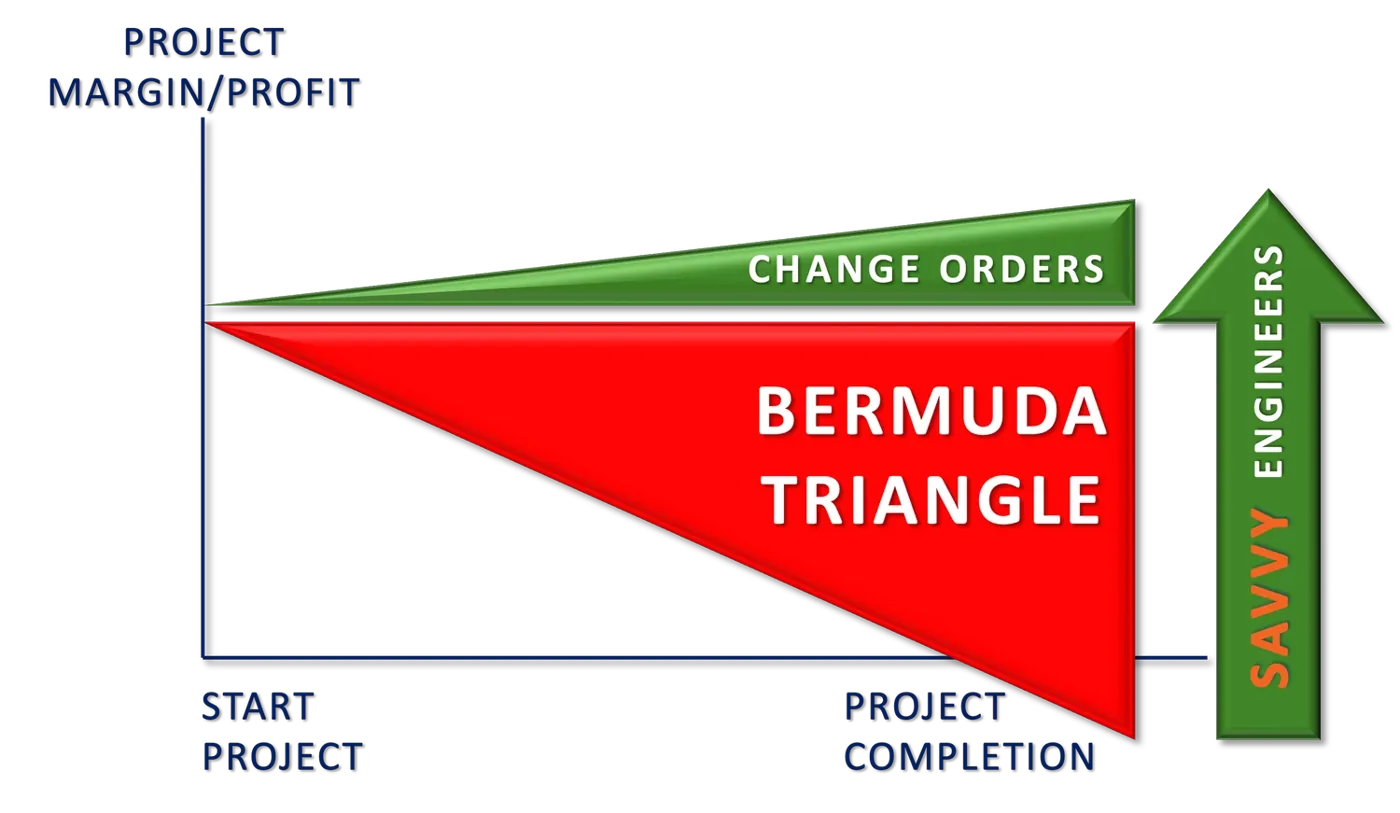

They know the technical effort behind every deliverable. Business Savvy Engineers also understand how scope, engineering hours, cost and customer value connect, so they can raise additional work before it becomes lost margin.
Scope delivered but never billed comes directly out of profit. Recovering even a small fraction can matter more than working a little faster, because a timely change order recovers the value of the additional work rather than only saving a fraction of its cost.
§ 02 — SAVVOP
Between contract award and kick-off, there is an opportunity to challenge commercial assumptions before they become operating habits. SAVVOP is a newly developed Commercial Deviation & Opportunity Study: a focused half-day session examining Scope, Hours, Cash, Information and Trust.
01 / Before
A 60-minute preparation conversation with the Managing Director and Project Director, supported by relevant commercial and project documentation.
02 / During
A facilitated half-day session with selected project leadership, systematically exploring deviations and opportunities.
03 / After
A concise Commercial Value Protection Charter delivered within three working days, documenting three to five priorities, accountable owners, actions and agreed follow-up.
The session produces a charter with three to five priorities, accountable owners, immediate actions and follow-up measures. It sets a shared commercial starting point, not a guarantee of financial savings.
Reference price · USD
US$8,750
Excluding applicable taxes, travel and accommodation. The full fee is credited against the Business Savvy Engineers program if your team starts within three months.
How SAVVOP works§ 03 — Business Savvy Engineers Program
The Business Savvy Engineers Program translates commercial priorities into practical challenges linked to live projects. Leadership engagement and the Engineering Savvy Scan establish a shared starting point; the four pillars of the Engineering Savvy Framework guide what teams practice.
Accountability
Engage leadership in commercial priorities, ownership, practical project challenges and progress reviews.
Commercial capability
Develop engineers' ability to connect scope, hours, cash and client value to everyday decisions.
Day 1
Agree commercial priorities, accountable owners and practical project challenges.
Day 50
Review actions, behaviors and commercial indicators; adjust the challenges to what the project needs.
Day 100
Assess progress, capture learning and agree priorities for the next improvement cycle.
Agree what progress looks like before each cycle. Review actions, behaviors and relevant commercial indicators against that starting point at Day 50 and Day 100.
Discover the Program§ 04 — Supporting resources
Start with your own engineering practice, then explore the book, free Introduction or team program.
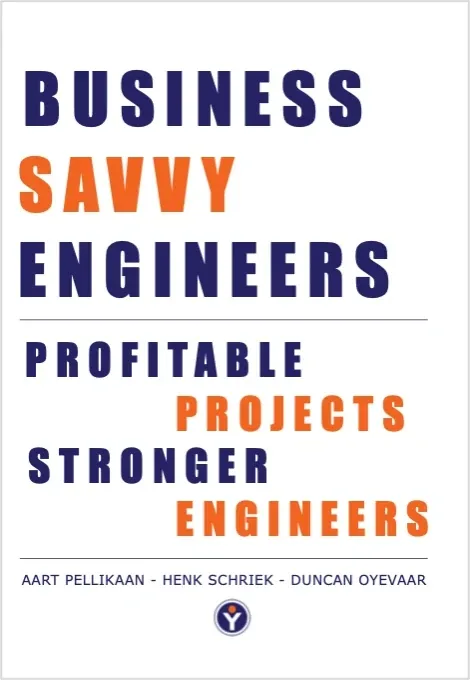
A practical reference for connecting technical decisions to project profitability.
PDF · 8 pages · No email needed
More for engineers and project teamsEngineers are trained to solve technical problems, not to read a margin or a cash flow. This 3-minute scan shows where you're already strong and where a small shift would make the biggest difference to your projects.
Based on the Engineering Savvy Scan, developed with the University of Amsterdam and used with 500+ engineers on four continents.
Start the scan12 questions · 3 minutes · Anonymous: no name, no email, nobody sees your answers.
Think about the last three months. Rate how often you actually did this, not how often you should. There are no right answers: an honest low score is more useful than a polite high one. "Client" means whoever uses your work, inside or outside your company.
We store only your 12 ratings and the date, nothing that identifies you. Privacy statement
Your next step
Start with SAVVOP, a team Scan or the 100-day Program. We will help you choose without requiring a wider engagement.